


You step outside on a humid day.
By the time you’ve walked to your car, your carefully styled hair has already betrayed you. The ends are lifting. There’s a weird halo forming. Everything you smoothed down this morning is now expanding like it’s got its own personality.
What Causes Frizzy Hair in Humidity? (+ How to Prevent It All Day)
What causes frizzy hair in humidity is one of those questions that seems simple until you realize the real answer involves way more than just “it’s humid outside.” The truth? It’s a combination of chemistry, hair condition, and—I’m not exaggerating—the specific choices you made this morning.
I learned this the hard way.
I grew up in the South where humidity sits at like 85% from April to October. My hair has been my unwilling test subject for about fifteen years. I’ve tried everything: the $2 drugstore fix, the $45 serum that promised miracles, even the kitchen sink approach where I’d just layer products until something stuck. What finally worked wasn’t one magic product. It was understanding how humidity actually attacks your hair—and then building a strategy around that.
Let me walk you through what I’ve discovered.
The Real Science (Explained So You Actually Get It)
Here’s what happens when humidity wrecks your hair:
Your hair has a structure called cuticles. Think of them like shingles on a roof, all laying flat and orderly. When humidity rises, moisture from the air starts penetrating your hair shaft. This causes the strand to swell.
When the strand swells, those cuticles lift up. They stop lying flat.
That’s literally frizz. It’s not random chaos—it’s your hair’s physical structure responding to moisture.
But here’s the part that messed with my head for years: your hair’s condition determines how badly this affects you.
If your hair is already dry or damaged, the cuticles are already partially raised. The moisture just makes it worse—sometimes way worse. If your hair is healthy and properly hydrated, it can handle some atmospheric moisture without turning into a lion’s mane.
| Hair Condition | Humidity Response | Why It Matters |
|---|---|---|
| Dry or damaged | Absorbs moisture aggressively; cuticles already raised | Frizz is immediate and dramatic |
| Properly hydrated | Absorbs less moisture; cuticles stay mostly flat | Frizz is minimal, manageable |
| Over-moisturized (rare) | Can actually get limp in very high humidity | Might need lightweight products instead |
| Very porous (curly/coily) | Absorbs moisture fastest; most frizz-prone | Requires strongest preventative strategy |
Why Your Current Strategy Probably Isn’t Working
I used to think the solution was: use the frizz product.
I’d buy anti-frizz serum, apply it, feel confident for maybe ninety minutes. Then by lunch my hair would be negotiating its terms of surrender with the humidity.
What I wasn’t doing: addressing the root issue.
Frizz happens in two phases. Phase one is before you leave the house. Phase two is throughout the day. Most people only tackle phase two. They wait until frizz appears, then try to fix it with a product. That’s reactive, not preventative.
The shift happened when I started thinking about it differently.
The real anti-frizz strategy starts the night before. It continues through your morning routine. It includes your entire product selection. And yes, it includes in-the-moment fixes—but only as backup.
What Happens to Your Hair at Night (And Why It Matters)
This one surprised me.
The day before a humid day, what you do at night determines how vulnerable your hair will be. I’m talking about:
How you sleep on it. Regular pillowcases cause friction. Friction damages the cuticle layer. Damaged cuticles = moisture absorption waiting to happen. Silk pillowcases aren’t just a luxury thing—they genuinely reduce friction. Same with loosely braiding your hair or using a silk bonnet.
I tested this. On humid mornings after sleeping on a regular pillowcase, my hair was noticeably frizz-prone by 10 a.m. After switching to a silk pillowcase? The frizz didn’t show up until afternoon, if at all. That’s not placebo. That’s damage prevention.
What you do (or don’t do) with moisture. If you go to bed with damp hair, your hair is already swollen. When it dries overnight—especially unevenly—the cuticles are primed to be lifted. Wet hair is more fragile. Blow-dry to at least 80% before bed, or let it fully air-dry. Don’t sleep on wet hair, period.
The products you use before bed. This is where it gets tactical. Heavy oils and serums on wet hair create buildup that looks like frizz prevention but actually traps moisture in the hair shaft. That’s the opposite of what you want.
The Morning Routine That Actually Prevents All-Day Frizz
Let me be specific because “use a good shampoo” doesn’t actually help anyone.
Step 1: Don’t start with water on already-dry hair.
I know this sounds weird. But if your hair dried overnight with any texture (waves, kinks, whatever), adding water in the morning will swell those cuticles right back up. You’re literally reactivating the problem.
Instead, assess the damage. If your hair looks okay, don’t wet it. If it looks like it needs help, commit to fully rewetting and styling it—don’t do that half-measure where you spray water on the frizzy spots. That just makes it worse.
Step 2: Use a sulfate-free shampoo.
Sulfates strip the cuticle layer. On a humid day, you need your cuticles as intact as possible. This is non-negotiable for me. Sulfate-free shampoos are cheaper than they used to be, so this isn’t a luxury expense.
Step 3: The conditioner moment.
Conditioner on a humid day has one job: prepare your hair to repel moisture. That sounds contradictory (you’re adding moisture to prevent moisture absorption?), but healthy, hydrated hair repels excess moisture better than dry, dehydrated hair does. They’re not the same thing.
I leave conditioner on for the full recommended time—not thirty seconds. The longer it sits, the more it penetrates the shaft and seals the cuticle layer down.
Step 4: The sealing step (this is where it changes everything).
After conditioning, you need a product that seals moisture in and new moisture out. This is where most people get lost because there are a hundred options, and half of them feel greasy.
Here’s what worked for me: a lightweight leave-in conditioner or anti-humidity spray applied to damp hair before blow-drying. The blow-dry activates it. It creates a microscopic barrier on the hair shaft.
The key word is lightweight. Heavy oils and thick creams will build up and start looking like frizz themselves.
The Blow-Dry Method That Locks Everything Down
This is technical but important.
Direction matters. Blow-dry with the cuticle direction—meaning from root to tip, not randomly. This smooths the cuticles flat. It’s like brushing your hair the right way versus against the grain. One works, one makes it frizzy.
Tension matters. You need to blow-dry with some smoothing tension. That doesn’t mean rough treatment. It means using a paddle brush or paddle attachment and pulling slightly as you dry. This keeps cuticles from lifting while the hair is vulnerable.
Temperature matters. High heat is tempting because it dries fast. But it can also damage the cuticle if you’re not careful. I use medium-to-high heat, but I’m not holding the dryer three inches from my scalp. I keep it at about six inches and keep it moving.
Finish matters. The last ten seconds? Cool shot. Your hair cuticles close when exposed to cool air. That’s not poetic—that’s biology. The cool shot seals everything down.
The Midday Reality Check (What Actually Works)
Let’s be honest: even with perfect morning preparation, humidity will still try to wreck your hair.
By afternoon, you might notice frizz starting. This is normal. This is fine.
What you do about it at noon determines whether you look polished at 5 p.m. or whether you look like you stuck your finger in a socket.
Lightweight anti-frizz sprays are your friend here. Not heavy serums (those look greasy and make it worse). Sprays. Apply sparingly—a couple of spritzes on the ends and any frizzy areas. Finger-brush it in rather than using a brush. Let it dry for a minute.
Dry shampoo, yes really. This seems random, but it actually works. The powder absorbs excess moisture and adds grip. It prevents that limp, defeated look hair gets when humidity has been assaulting it all day.
Silk or satin bobby pins if you’re securing anything. Regular metal pins create friction. Friction lifts cuticles. I know this sounds obsessive, but after years of this, I notice the difference.
The Product Categories That Actually Matter (Not Every Brand)
This is where I’m going to be real: not all anti-frizz products work.
Some are better than others, but what matters most is the category:
Anti-humidity sprays. These create a protective barrier. Apply after blow-drying, before you leave the house. This is your primary defense. The best ones are lightweight and don’t require a second wash to remove.
Serums for dry ends. These are different from anti-humidity sprays. These go on specific areas (ends, any damaged spots) and seal moisture in. Use sparingly—a dime-sized amount for shoulder-length hair. These shouldn’t feel heavy.
Leave-in conditioners. These are protection + hydration. Use on damp hair, before blow-drying. The lighter formulations are better for humid weather.
Silk or satin pillowcases. I’m listing this as a “product” because it legitimately prevents frizz. It’s one of the few things that works passively while you sleep.
Microfiber towels or t-shirts for drying. Regular towels cause damage. Microfiber reduces friction. This prevents the frizz from starting in the first place.
The products you don’t need: heavy oils, thick creams, serums that feel greasy, anything that builds up. Those all eventually make frizz worse, even if they feel smooth initially.
The Mistakes I Made (So You Don’t)
Layering too many products. I had this phase where I thought more products = more protection. Wrong. It created buildup. The buildup looked like frizz. I went back to three products: shampoo, conditioner, and an anti-humidity spray. Done.
Using the same products in winter. Humid-weather products aren’t ideal for dry winter air. The barrier-creating sprays can make hair look dull when humidity is low. I swap to lighter leave-in conditioners in winter.
Applying anti-frizz product to already-wet hair. If you’re restyling midday and your hair is wet, don’t use the heavy sealing spray yet. Let it dry first, then apply. Otherwise you’re trapping moisture in.
Expecting results on the first humid day. Your hair has a “memory” of damage and dryness. It takes maybe two weeks of consistent proper care before it stops immediately frizzing in humidity. You’re literally repairing the cuticle layer. That’s not instant.
Quick Reference: Your Humid-Day Routine
- Night before: Sleep on silk pillowcase. Don’t go to bed with wet hair.
- Morning (wet routine): Shampoo (sulfate-free) → Condition (full time) → Anti-humidity spray (to damp hair) → Blow-dry with tension and cool shot.
- Before leaving: Quick mirror check. Touch up any obvious frizz with lightweight spray.
- Midday: If needed, light anti-frizz spray on ends. Consider dry shampoo for grip.
- After work: Probably don’t restyle. Your hair made it through. Accept the small victory.
The Hair Type Variable You Can’t Ignore
Straight hair and curly hair handle humidity completely differently.
Straight hair has a more uniform cuticle structure. Humidity lifts cuticles, creating that frizz halo effect. The approach is all about preventing moisture penetration: sealing sprays, protection, smooth drying.
Curly and wavy hair is naturally more porous. Humidity doesn’t just create frizz—it can cause the entire curl pattern to revert or get confused. If you’ve straightened curly hair, humidity is actively working against the style you created. The approach is more intensive: deep conditioning, moisture balance, possibly curl-specific products.
If you have curly hair, you might need stronger sealing products (look for “anti-humidity” or “moisture barrier” language). If you have straight hair, lightweight options usually work fine.
What People Get Wrong About Humidity and Hair
Myth: Humidity is always bad.
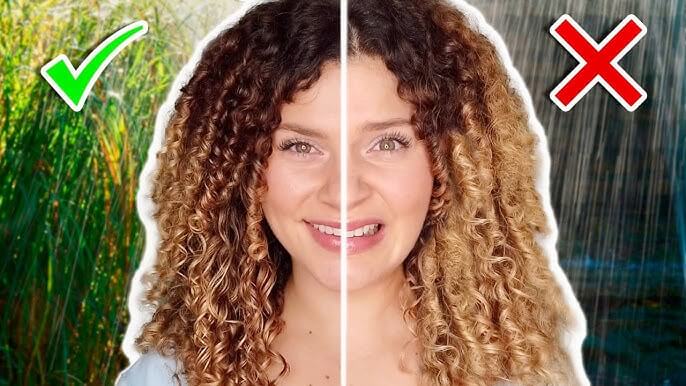
Reality: Moderate humidity is actually fine. Your hair needs some moisture. The problem is excess moisture. When humidity crosses 70%, that’s when cuticles start getting aggressive. Below 60%? Your hair usually does fine.
Myth: You need to buy expensive products.
Reality: The formula matters more than the price tag. A $12 lightweight anti-humidity spray works better than a $60 serum if the serum is too heavy. Read ingredients. Lightweight ingredients (silicones, light oils) > heavy ingredients (thick butters, waxes).
Myth: Frizz is just about your hair.
Reality: Your routine matters more than your products. Someone with okay hair and a solid routine will have better results than someone with great hair and no strategy.
Myth: You can fix humidity frizz with more moisture.
Reality: You fix it with hydration + protection, not just hydration. A deep conditioning mask is great, but without a sealing product, the moisture just escapes and frizz returns.
Frequently Asked Questions
Q: Does humidity actually damage hair, or is it just cosmetic frizz?
A: Mostly cosmetic in the short term, but chronic humidity exposure can damage the cuticle layer over time, especially combined with heat styling. That’s why prevention matters—you’re protecting the cuticle before it gets damaged.
Q: Can I use regular hair oil to fight frizz?
A: Regular oils work if your hair is dry, but they’re usually too heavy for humidity days. Lightweight silicone-based anti-frizz sprays work better because they seal without feeling greasy. If you like oils, use them sparingly on the very ends only.
Q: Is expensive heat protectant spray necessary?
A: Heat protectant and anti-frizz sprays serve different jobs. Heat protectant prevents heat damage while styling. Anti-frizz sprays create a barrier against humidity. You might need both, or you might find a hybrid product that does both. Don’t confuse them.
Q: Why does my hair frizz even when I don’t style it?
A: If you just let your hair air-dry naturally without any product, humidity is completely uncontrolled. The cuticles lift as the hair dries irregularly. Always use at least a leave-in conditioner or lightweight anti-frizz spray, even on no-style days.
Q: How often should I deep condition in humid climates?
A: Once a week is solid. More if your hair is damaged or very curly. Deep conditioning hydrates the shaft, which helps your hair resist excess moisture absorption. Think of it as preventative maintenance.
Q: Will a keratin treatment solve this forever?
A: Keratin treatments smooth the cuticle layer and do reduce frizz—sometimes dramatically—for about 8-12 weeks. But they fade. They’re not permanent. If you’re getting them, you’re committing to maintenance appointments. They work, but they’re an investment.
Q: Can I use anti-humidity spray on dry hair, or does it have to be damp?
A: Read your product—most anti-humidity sprays work on both. But they work better on clean, damp hair after blow-drying because they bond with the cuticle more effectively. On already-dry hair, they’re more of a surface fix.
The Real Takeaway
Humidity doesn’t have to mean bad hair days.
It requires understanding what’s actually happening (cuticles lifting when moisture enters the hair shaft), committing to a consistent routine (not just grabbing a product when frizz appears), and using the right category of products (lightweight sealing products, not heavy oils).
The strategy I use now—silk pillowcase, sulfate-free shampoo, proper conditioning, lightweight anti-humidity spray, blow-dry with tension—takes maybe five extra minutes in the morning. On humid days, I’m not fighting my hair by noon. I’m not reapplying products every two hours. I’m just… doing life with decent hair.
That’s the goal.
Ready to prevent humidity frizz year-round? Check out our guide to the best anti-humidity products for your hair type for specific brand recommendations.